How to Choose the Right Skid Steer Size for Your Construction Project?
A skid steer is one of the most versatile pieces of equipment on a construction site. It is compact, powerful and can handle different kinds of tasks. If it is accompanied by the right attachment, it can also handle challenging tasks like moving dirt, carrying materials, grading and much more. You have to remember that choosing the right skid steer is not about having the biggest or the most powerful one. The right size depends on various factors, which will be discussed further in the article. In this article, we will look into the topic of how to choose the right skid steer size for your construction project. Let’s get started!
Understanding Skid Steers
Before going deep into the topic, you need to have an idea of what a skid steer is and how it works.
A skid steer is a compact and versatile piece of equipment used in every construction site. It can handle different tasks that include digging, lifting, grading and demolition. Due to its compact size and fast movement, it is a great choice to use in tight and confined spaces.
How Skid Steers Operate
Usually, skid steers come with lift arms which can be connected to different attachments. Due to this versatility, it can handle different types of work. The name of the equipment, skid steer, comes from its movement. It turns on the concept of skidding or dragging the wheels on the surface, which gives it great maneuverability, especially in tight spaces.
Understand the Different Skid Steer Size Categories
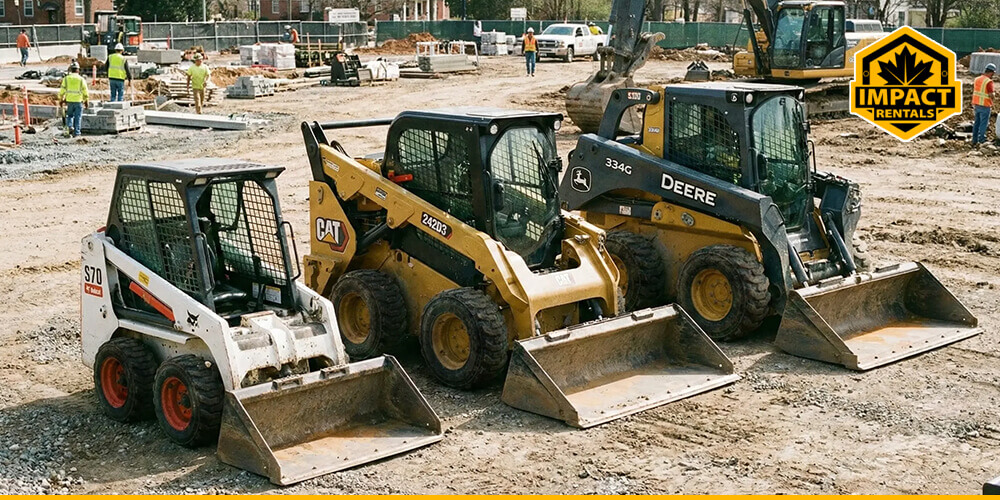
Skid steers are available in three sizes, namely small, medium and large frame sizes. Each size is chosen based on the type of work.
Small-Frame Skid Steers
Small-frame skid steers are compact machines used for jobs in confined or limited spaces. According to Impact Rentals, this category generally has a rated operating capacity below 1,750 pounds and horsepower of 50 or less.
Small-frame skid steers are commonly used for:
- Residential construction
- Landscaping
- Small demolition projects
- Residential backyard projects
- Working between buildings
- material handling
- Projects with narrow passages
The major advantage of a smaller skid steer is its mobility. It can work in places where a larger machine may not fit easily. But you need to remember that smaller is not always better. If you need to lift heavy pallets, carry large loads, or operate demanding hydraulic attachments, a small skid steer may not have enough capacity or power.
Medium-Frame Skid Steers
Medium-frame skid steers offer a balance between compact size and stronger performance. This category has a rated operating capacity of around 1,750 to 2,200 pounds and horsepower between 50 and 70. Most contractors choose a medium-sized skid steer to handle various tasks.
It may be suitable for:
- General construction work
- Loading and unloading materials
- Grading
- Backfilling
- Medium-duty earthmoving
- Road and paving work
- Larger landscaping projects
Large-Frame Skid Steers
Large-frame skid steers are built for the jobs that need more power and lifting capacity. They generally have a rated operating capacity above 2,200 pounds and 70 or more horsepower.
These machines are used for:
- Large construction projects
- Heavy material handling
- Major earthmoving work
- Demolition
- Loading trucks
- Large-scale site preparation
- Jobs that require powerful attachments
A larger skid steer can complete heavy-duty work faster, but needs more space compared to small and medium-framed skid steers. So, it’s better to ensure that your job site has enough space for the machine to operate safely.
Factors to Consider When Selecting a Skid Steer
While choosing the right skid steer, you need to consider various factors like:
Operating Capacity
The operating capacity of a skid steer defines the maximum weight a skid steer can lift and carry without tipping and causing issues to the equipment. In simpler terms, it shows how much load the equipment can carry. In most cases, a medium- or large-sized skid steer has higher operating capacity.
Attachment Compatibility
When you need to deal with different tasks at your job sites, attachments can save you from buying or renting different equipment. You can perform different tasks by using a single piece of equipment. But you need to know that different attachments need different hydraulic power to work effectively. So, choosing the right skid steer with the right hydraulic flow will support the attachments you use.
Reach
Reach means the amount of distance a skid steer can cover by reaching with its bucket. It is an important factor to consider because the equipment should reach the areas where you need to work. For example, if you want to load materials into a truck, you need a skid steer that has long reach.
Lift Type
The lift path can affect how well the machine performs certain jobs. Each lift type has its own applications and advantages. Skid steers commonly use radial lift or vertical lift designs.
A radial lift skid steer has lift arms that move up and outward in an arc. This design provides strong reach at mid-height and can work well for jobs that take place close to the ground. Whereas a vertical lift skid steer is used for greater height and reach.
Hydraulic Requirements
Hydraulic power is important when using powered attachments. The main hydraulic system operates the machine, whereas the auxiliary hydraulics power the attachments. Smaller skid steers may be suitable for standard hydraulic requirements, while more demanding attachments may need a machine with higher hydraulic flow.
Terrain
The surface conditions on your job site are another important factor. Skid steers are available in wheeled and tracked versions. Choosing the right one depends on the ground you are working on.
Wheeled skid steers can be a good choice for firm and relatively even surfaces. They are often easier to move around on hard ground and can be useful for construction sites with solid surfaces. Whereas tracked skid steers provide better traction on challenging surfaces such as mud, sand, snow, and uneven terrain. Their weight is spread over a larger surface area, which can help them perform in softer ground conditions.
Operator Safety and Comfort
The skid steer should also be suitable for the person operating it. Check important features like operator visibility and space, controls, seat belt, rollover protection, lights and alarms. The operator should easily understand the controls, load limits and safety procedures.
A properly sized machine is safer and easier to operate than an overloaded or irrelevant machine for the working environment.
Choosing the Right Skid Steer for Your Construction Project
Choosing the right skid steer size can make a major difference for your project’s success. A machine that is too small may struggle with heavy loads and demanding tasks. A machine that is too large can cost more, use more space, and be harder to move around the job site. So, it’s better to understand the project requirements and choose the one that suits you.
At Impact Rentals, you can find skid steer rental options designed for different project needs. Whether you need a compact machine for a confined work area or a more powerful skid steer for demanding construction work, we are there for you! Contact us today to explore the skid steer rental options and select the right machine and attachments for the job.