Are Backhoes or Excavators Better?
Various jobs require the use of backhoes or excavators because it would be challenging to complete any task without the right equipment. Backhoes and excavators can be used for various tasks, such as agriculture, landscaping, construction, snow removal, and more. But you need to know some significant differences if you are renting or owning one of these pieces of equipment. In this article, we will provide a clear answer to the question “Are backhoes or excavators better?” to help you streamline your tasks and increase your revenue.
What Is a Backhoe?
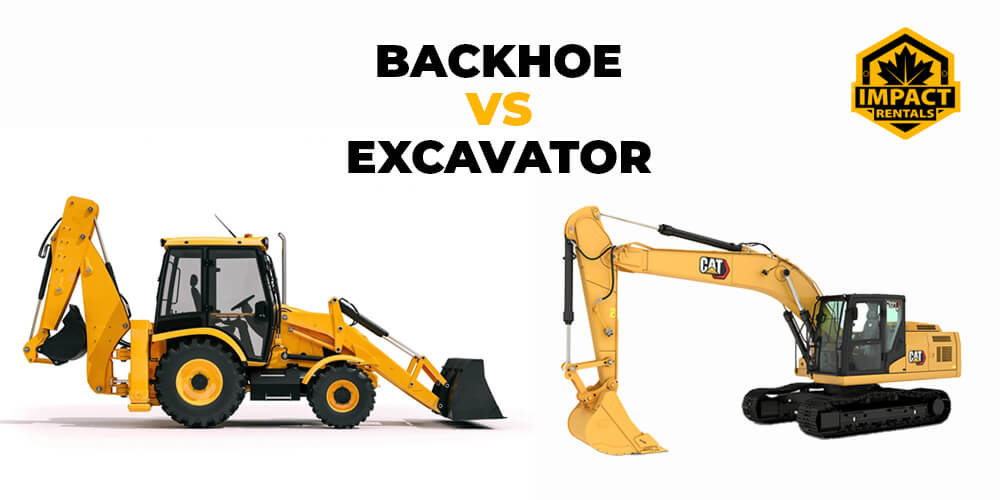
Backhoes are primarily used for excavation and for performing specific tasks. It is smaller and easier to move than an excavator, making it suitable for a variety of jobs. A backhoe has a large front loader with a digging arm, plus a boom, stick, and bucket. Backhoes operate on wheels, and another type of backhoe moves on tracks; these are called track loaders.
What Is an Excavator?
They are also called trackhoes. An excavator is the most commonly used piece of equipment for digging and lifting heavy materials. It has a boom, a chassis, a bucket, a dipper, and moves on tracks. An excavator can be attached to various equipment to make it more versatile.
Pros and Cons of Excavators
Pros
- Great digging capacity
- Versatile
- Capable of working in large areas
- Better lifting capacity
Cons
- Unable to work in confined spaces
- Transportation
- Higher operational costs
Pros and Cons of Backhoes
Pros
- Versatile
- Ideal for medium-sized projects
- Easy to transport
- Easy to operate
Cons
- Limited digging depth
- May not be suitable for rough and unstable ground
- Less lifting capacity
Key Differences Between a Backhoe and an Excavator
Below are some key differences between a backhoe and an excavator. These differences signify the usage of the equipment for specific jobs. They are:
Size
The major difference between these pieces of equipment is size. Excavators are large and heavy, whereas a backhoe is comparatively smaller. Due to its size and capacity, an excavator is used for heavy-duty tasks such as mining, drilling shafts, rock blasting, and complete industrial projects. A backhoe is used for farming, loading, snow removal and smaller to medium-scale construction projects.
Versatility
Versatility plays a major role in differentiating the equipment. Both pieces of equipment are compatible with various attachments, but backhoes offer more options than excavators. Another advantage is that backhoes can be driven on hard surfaces like roads and concrete floors, making them easier to use on vast, spread-out sites.
Rotation
The rotation capabilities of backhoes and an excavator differ. It is a key factor for an operator when choosing equipment for a given task. An excavator can rotate 360 degrees, whereas a backhoe rotates only 200 degrees.
Mobility
As discussed earlier, excavators come with tracks. So, they can be used on challenging terrains, but are difficult to move from one site to another. At the same time, backhoes are usually wheeled and easy to transport from one site to another.
Functionality and Operational Capacity
Excavators are commonly used for digging and lifting heavy materials, so they are often seen in construction, excavation, material lifting, and demolition tasks. They have greater reach and depth, making it more efficient. A backhoe is a versatile machine used for a variety of jobs. It is used for medium-sized operations such as backfilling, digging, and moving materials with its front loader and hoe.
Choosing Between an Excavator and a Backhoe
The choice between a backhoe and an excavator depends on several factors, as outlined below. They are:
Project Size and Scope
When choosing equipment for a project, it is important to match the machinery to the size of the job you are taking on. To be specific, if you are into larger projects like excavation or heavy lifting, digging and moving heavier materials, you can choose an excavator because of its power and reach. On the other hand, backhoes are more versatile and suitable for medium-sized projects that involve different types of tasks.
Working Conditions
The terrain and space of the job site can greatly affect the choice of the equipment. If the job site is rough and uneven, then an excavator would be a great choice to make the job easier. Also, if the work is in residential or confined spaces, it’s better to use a backhoe because of its compact design and maneuverability. When it comes to mobility, a backhoe can move between different sites, whereas an excavator cannot.
Budget Considerations
It’s better to consider the initial investment and ongoing costs when choosing equipment. Compare the costs of renting and owning equipment to determine whether it fits your project’s budget. Usually, excavators have higher rental and operating costs than backhoes. So, assess the project’s duration and your future requirements, and decide whether to rent or buy the equipment.
Specific Tasks and Versatility
If your project involves both digging and loading, you can opt for a backhoe. An excavator is suitable for heavy lifting, digging, and earthmoving. Leverage the attachments for both the equipment to make them more versatile.
Rent Your Landscaping Equipment From Impact Rentals
The choice between a backhoe and an excavator depends on the project requirements. An excavator for digging holes and a backhoe for speed and versatility. Using both machines can benefit your project.
Rent your heavy equipment from Impact Rentals. We offer a range of options at affordable prices to suit your project’s requirements. Contact us today to find the perfect backhoe or excavator for your job. Our team will help you choose the right equipment for faster, more efficient, and safer work at your job site.