What Happens if Rental Equipment Gets Damaged?
Renting heavy equipment, compact machines or seasonal equipment gives you access to use high-quality equipment without the burden of buying it. Whether you are using a skid steer, an excavator or a backhoe loader, renting gives you the flexibility to use the right equipment when you need it while maintaining the balance between budget and cash flow. But even on well-managed job sites in Canada, accidents might happen.
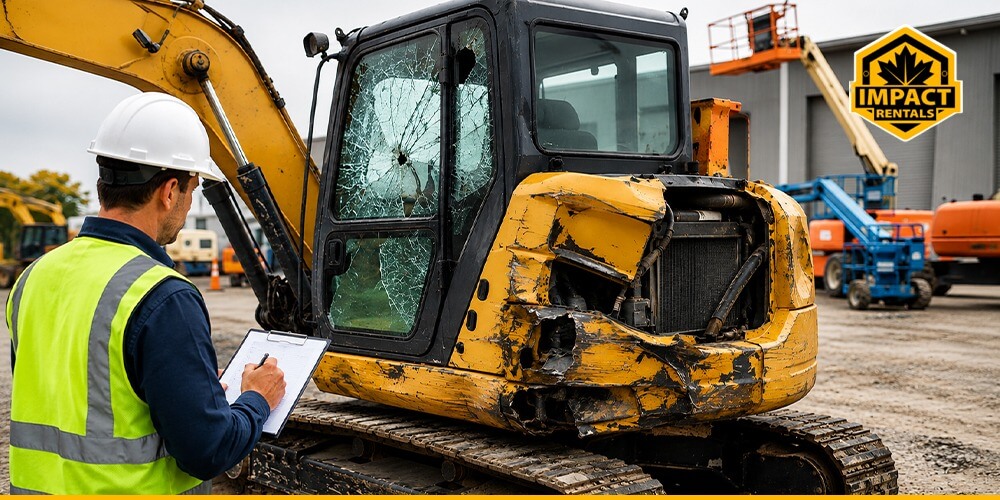
Equipment can get damaged due to many reasons, like mechanical issues or harsh weather. When the equipment gets damaged, most people will be worried about the payment, the delay of the project, and what steps they need to follow. In this article, we will explore what happens if rental equipment gets damaged, who is responsible and how working with a reliable partner like Impact Rentals can help you.
Things to Do When Rental Equipment Gets Damaged
1. The Basics: Understanding Equipment Responsibility
After signing the rental contract, you are the temporary owner of that equipment. This means that you need to be responsible for the equipment by maintaining safe operation, performing regular checkups and returning it in good condition. While regular wear and tear is common, you may not worry about it.
But not all damages are the same. Rental providers and insurance companies categorize equipment damage into three types. They are:
A. Normal Wear and Tear (Provider’s Responsibility)
Usually, there will be minor damages to the equipment that is used in regular tough work. Regular wear and tear and decline in equipment’s condition are common for regularly used equipment. As a renter, you don’t need to worry about it, as rental companies will include it in regular maintenance and equipment lifespan in their business model.
B. Accidental Site Damage (Insured Liability)
Accidental damage happens when equipment is used, and an unexpected event causes the damage. You have to know whether the accidental damage is covered by a rental protection plan or your company’s insurance policy for rented equipment.
C. Negligence and Contract Breach (Renter’s Responsibility)
This damage costs more for the contractors. If the equipment is damaged due to improper use, poor maintenance, or not following safety guidelines, it can be considered negligence, and the renter is solely responsible for these damages. Any standard protection plans or damage waivers will not cover it.
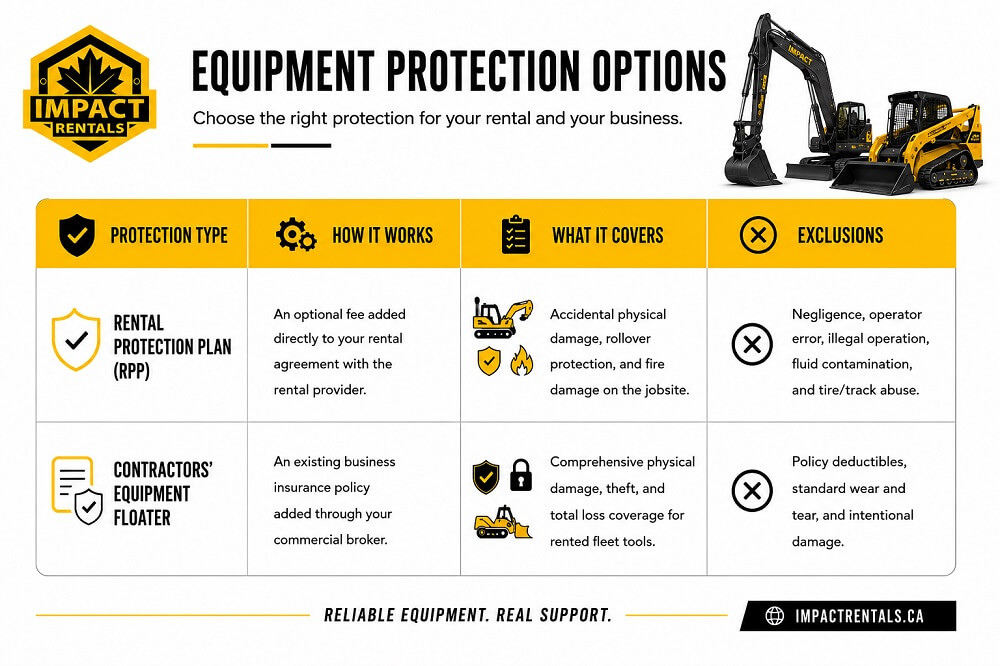
2. Rental Protection Plans vs. Commercial Insurance
Before renting any heavy equipment, ensure you know what damage protection or insurance coverage is included. Most contractors have either of these two options:
3. Step-by-Step: What to Do When Damage Occurs
If the rented equipment breaks down or suffers any accident, it’s important to follow a clear process to protect your crew, project and your budget.
Step 1: Prioritize Crew Safety
Stop using the equipment and shut it down. Ensure there are no safety risks like fuel leaks, electrical lines or unstable ground at the job site and clear them if any. Provide first aid to the injured and call emergency services if necessary.
Step 2: Prevent Secondary Damage
Take simple steps to reduce the damage or prevent it from getting worse and protect the job site.
Step 3: Thoroughly Document the Site
Maintain a record of the equipment by taking photos, securing the damaged part and the surrounding area. Document the time, date, weather and operator details. Note the details of the incident.
Step 4: Contact Impact Rentals Immediately
Do not try to repair the equipment or work with a technician without any approval. Contact the rental company immediately after the incident and follow their guidelines.
When you call Impact Rentals, our technical team arrives to assist you. We assess the equipment and deploy experts to repair it and ensure your project is on schedule.
4. Potential Costs of Equipment Damage
If the damage is caused by the operator’s mistake or not covered under the protection policy. You have to pay more than just repair costs. They are as follows:
- Direct Repair Costs: Usually, there will be OEM parts and technician charges to repair the equipment
- Total Replacement Value: If the equipment is stolen or the damage is beyond repair, you are responsible for the cost of the equipment.
- Loss of Use: The rental charge for the days the equipment remains in the garage for repair.
- Heavy Hauling & Recovery: Charges for towing or flatbed fees to remove the equipment from your job site.
- Environmental Remediation: If there is a requirement for cleanup of spilled fuels or lubricants, the cleanup costs will add up.
5. How to Avoid Equipment Damage: Best Practices for Renters
The most effective way to manage equipment damage is to prevent it before it happens. Follow these jobsite best practices:
- Conduct Pre-Delivery Inspections
- Perform Daily Inspections (Walkarounds)
- Choose the right equipment for the job
- Hire trained or certified equipment operators
- Secure the Jobsite
Work with a Reliable Rental Partner like Impact Rentals
At Impact Rentals, we understand that construction, landscaping, and winter maintenance in Canada can be unpredictable. That is the reason we have a well-maintained fleet of modern technology and trusted manufacturers. If there is any issue on your work site, our dedicated service team is there to reduce downtime and keep your operations running smoothly. Contact us today and book your heavy equipment for your project.